How Poor Drainage Around Your Home Can Lead to Foundation Failure
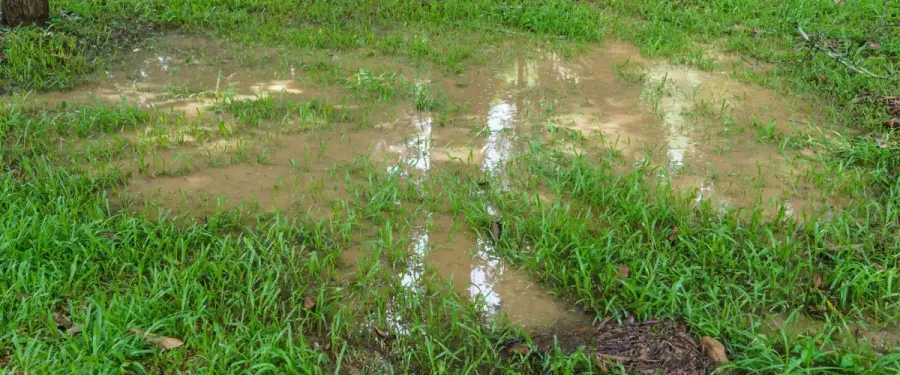
In our area, we get a lot of rain. With an average of around 54 inches of precipitation per year (well above the national average), Memphis and the Mid-South are some of the wetter parts of the country. That being said, a surprising number of serious foundation issues trace back to rain, such as pooling water and overflowing gutters. Water problems create drainage problems, and drainage is one of the leading causes of residential foundation damage.
Why Water Is Your Foundation’s Biggest Enemy
Water does not stay put. When it cannot drain efficiently away from your home, it can work against your foundation in several ways.
Hydrostatic Pressure on Foundation Walls
When water saturates the soil surrounding your foundation walls, that waterlogged soil becomes heavy and exerts outward pressure against the walls. This is called hydrostatic pressure, and over time it can cause bowing, cracking, and inward movement of foundation walls, particularly in homes with basements or crawl spaces.
Soil Expansion, Shrinkage, and Differential Settlement
Memphis has a variety of different soils, and these soils expand when saturated and shrink when they dry out, sometimes at different intervals. When drainage problems cause these repeated cycles, the soil beneath your foundation moves. Each cycle puts stress on the structures above it. Over time, these repeated movements lead to differential settlement: sections of the foundation sink or shift at different rates, causing visible cracking, sloping floors, and structural misalignment throughout the home.
Moisture Intrusion in Basements and Crawl Spaces
When surface water cannot drain properly, it finds another path, often through small cracks or porous areas in your foundation, where it enters your basement or crawl space. Once moisture is regularly getting in, you are dealing with dampness, mold growth, wood rot, and degraded air quality in addition to the structural risks. A musty smell in your home is frequently one of the first signals that drainage problems are beginning to affect the foundation level.
The Most Common Drainage Problems That Damage Foundations
- Improper yard grading: When the ground slopes toward the home instead of away from it (negative grading), rainwater collects directly against the foundation.
- Clogged gutters and downspout problems: Gutters that overflow from debris send water cascading down exterior walls and into the soil at the foundation line. Even functioning downspouts cause damage if they discharge too close to the house.
- Moisture-trapping landscaping: Raised flower beds, dense plantings, and mulch built up against the foundation hold water against exterior walls rather than directing it away.
Warning Signs That Drainage Is Affecting Your Foundation
Drainage issues tend to show up gradually, not all at once. Here are the most important signals to watch for:
- Water pooling near the foundation after rain: If puddles form against or immediately adjacent to your foundation walls and persist long after rain has stopped, your drainage is not working as it should.
- Soggy or perpetually wet areas in the yard: Low spots that stay soft and muddy indicate water that is not draining properly. If those areas are near the house, they are a concern for the foundation.
- Cracks in interior walls, especially above doors and windows: As foundation sections shift from soil movement, the frame above them distorts, and drywall or plaster cracks follow, typically in diagonal lines radiating from corners.
- Doors or windows that stick or do not close evenly: Sticking door and window frames is a common result of differential foundation settlement caused by uneven soil moisture.
- Damp, musty smells or visible moisture in the basement or crawl space: This almost always indicates water is finding a way in, and drainage failure is the most common culprit.
Drainage Solutions to Prevent Foundation Damage
At American Standard Foundation Repair, we are the foundation experts! We evaluate not just the foundation itself, but the soil conditions, terrain, and drainage patterns that are contributing to the problem.
Subsurface Drainage Systems
For homes where surface grading improvements alone aren’t enough, subsurface drainage involves trenching around the foundation and along a path to proper drainage outlets. PVC piping installed in the trenches uses gravity flow to direct water away from the foundation without allowing it to soak into the soil. Trenches are backfilled with gravel and topsoil, and French drains installed above the trenching capture surface water.
Surface Drainage and Regrading
On proper terrain, shallow drainage swales built along natural slopes and contours can direct surface water away from the foundation using gravity alone. Regrading the yard to restore positive slope can dramatically reduce the moisture load on your foundation walls.
Retaining Walls with Proper Drainage
On sloped properties, retaining walls can help manage water movement. Keep in mind, a retaining wall without adequate drainage can actually make moisture problems worse by trapping water on the uphill side and increasing pressure against the structure below. Properly engineered retaining walls include weep holes and perforated drainage elements to keep soil intact and water moving away from vulnerable areas.
Prevent Drainage Issues Today
Some of the most impactful drainage improvements are also the most straightforward:
- Clean gutters at least twice a year: More frequently if you have nearby trees, and after heavy storms. Check for debris buildup and sagging sections that interrupt proper flow, and make sure downspouts are clear, secure, and discharging at least four to six feet from the foundation.
- Walk your property after heavy rain: Observe where water collects, particularly near the foundation on shaded or lower-grade sides. Those pooling spots tell you exactly where intervention is needed.
- Verify that your yard grade slopes away from the foundation: Check whether the surrounding soil has settled inward over time, which gradually reverses proper drainage.
These steps will not solve serious subsurface drainage or structural problems, but they can meaningfully reduce the amount of water stressing your foundation over time.
The Foundation Experts Serving Memphis and the Mid-South
American Standard Foundation Repair serves homeowners throughout the greater Memphis area and Mid-South. We also have branches in Nashville, TN, Knoxville, TN, and Northwest Arkansas.
If you have noticed standing water near your foundation, moisture in your basement or crawl space, or any of the warning signs described above, do not wait for the situation to worsen. Contact us today for a free estimate and let our team evaluate what your drainage situation means for your foundation.